- Property tax revenues in North Carolina’s 10 largest counties exceeded inflation plus population growth by more than $2.6 billion over the past decade.
A North Carolina House select committee studying rising property taxes is recommending a constitutional cap on property tax rate growth and tighter limits on affordable housing tax exemptions, framing both as necessary responses to rapid increases in property taxes across North Carolina.
In its draft final report dated May 1, the House Select Committee on Property Tax Reduction and Reform outlined the two primary recommendations ahead of the 2026 legislative session.
“What this amendment does is, at the will of the voters, require the General Assembly to establish limits on the growth rate of property tax levies, ensuring any future increases are deliberate, transparent, and constrained within a defined policy framework that protects homeowners, renters, and business owners,” said Rep. Brian Echevarria, R-Cabarrus, during Wednesday’s legislative meeting.
The proposals come as lawmakers grapple with evidence that property tax collections have grown significantly in recent years. A recent John Locke Foundation study found that property tax revenues in North Carolina’s 10 largest counties exceeded inflation plus population growth by more than $2.6 billion over the past decade. The average revenue growth was about 62%, compared to a 51% benchmark tied to inflation and population.
The gap was even more pronounced in several fast-growing counties. Wake County’s property tax collections grew by approximately 103%. Cabarrus County’s collections more than doubled during the same period. Both increases far outpaced the benchmark tied to inflation and population growth.
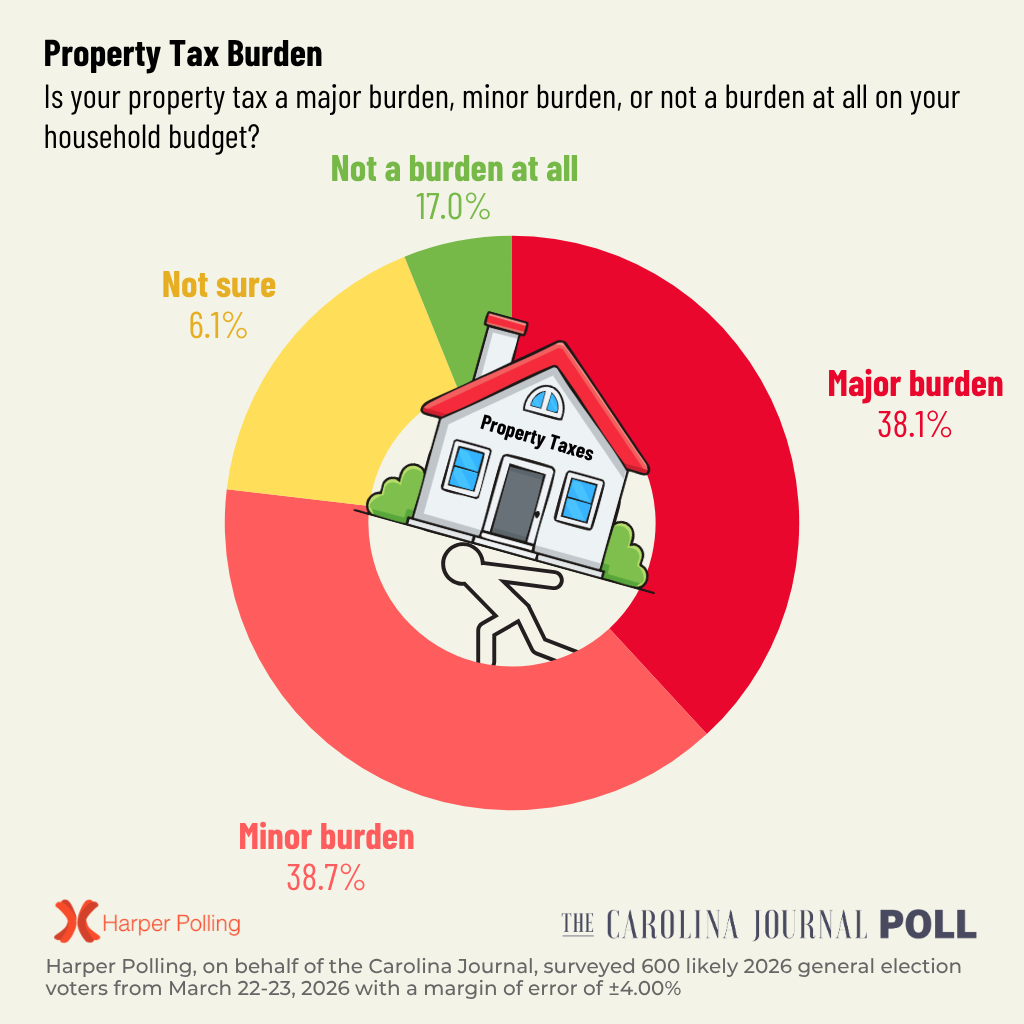
Recent polling suggests public sentiment is increasingly aligned with these concerns. A March Carolina Journal poll found that 76.8% say their property taxes are a burden on their household budget, and 73.2% would support an amendment to the North Carolina Constitution that would require limits on local government property tax increases.
Echoing both the committee’s sense of urgency, House Speaker Destin Hall released a statement following the release of the recommendations.
“Property tax hikes are overburdening North Carolina families, who are footing the bill while some local governments take in far more than inflation and population growth can justify,” said Hall in a press release Wednesday. “I applaud the House Select Committee on Property Tax Reduction and Reform for pursuing real reforms like the constitutional amendment on levy limits, which would ease this burden so North Carolinians can keep more of their hard-earned money.”
A levy limit on property tax growth
The committee’s top recommendation proposes amending the constitution to require the General Assembly to adopt a levy limit, which caps the total property tax revenue local governments can collect each year.
Unlike limits on tax rates or property values, a levy limit focuses on the total revenue raised. As property values rise sharply, local governments would still be restricted in how much additional revenue they can generate.
The amendment itself would not set the exact cap. Instead, it would require lawmakers to establish a limit in future legislation.
“A well-designed limit should account for inflation and population growth so it reflects real economic conditions, and it needs to be comprehensive — otherwise local governments will find ways around it, undermining the goal of providing relief for taxpayers,” said Joseph Harris, fiscal policy analyst for the John Locke Foundation.
Democrats and some local government advocates, however, raised concerns about the potential impact on funding for essential services, arguing that property taxes remain a cornerstone of local government budgets.
“Property tax is a primary funding source for local services… I am concerned that the levy limit is a simple solution to a very complicated problem,” said Rep. Maria Cervania, D-Wake.
Harris pushed back on that concern, arguing that a levy limit can account for those realities, if properly designed.
“It’s true that property taxes are a primary funding source for local services, which is exactly why design matters so much,” Harris said. “A levy limit isn’t about ignoring that complexity — it’s about introducing predictability for taxpayers while still allowing revenues to grow with inflation and population. If structured correctly, it can balance the need for local funding with the need to protect homeowners.”
If approved by the General Assembly, the proposal would go before voters in a statewide referendum on the November 2026 general election ballot.
Tightening affordable housing tax breaks
The committee’s second recommendation targets what lawmakers described as growing misuse of the state’s affordable housing property tax exemption.
The proposal creates what supporters call a new and more clearly defined framework for affordable rental housing.
Eligibility would be restricted to developments that are either 100% nonprofit-owned or structured as joint ventures with government financing and oversight. In addition, properties would be required to maintain affordability commitments for at least 15 years.
Tax exemptions for these properties would be tied to the percentage of units that meet affordability standards. The proposal would also shorten the period developers can hold land tax-deferred for future affordable housing from 10 years to 5 years, and require all currently exempt properties to reapply under the updated criteria.
The changes aim to close loopholes that emerged after a 2013 court ruling. Critics say the ruling enabled private investors to partner with nonprofits and receive tax exemptions without guaranteeing long-term affordability.
The General Assembly is expected to take up the proposals when it reconvenes later this month. The committee’s work will continue, as lawmakers have extended its expiration date through December 2026.