The North Carolina State Health Plan Board of Trustees took action Tuesday to keep the plan financially afloat after a new financial outlook showed the State Health Plan (SHP) could run out of cash by the end of 2026 or the beginning of 2027.
At its Tuesday meeting, the board voted unanimously to temporarily increase the monthly contribution the plan receives from the Retiree Health Benefit Fund (RHBF) from $300 to $600 per retiree. The increase applies retroactively from July through December 2026 and applies only to premiums paid by the retirement system; it will not affect member-paid premiums. The plan is to repay the additional amount, with interest, as soon as possible.
The SHP estimates that the adjustment would provide approximately $415 million in additional funds before the end of the year.
RHBF contributions will revert to $378 per retiree per month in January.
The plan was originally projected to face a roughly $500 million deficit in 2026 and a $1 billion deficit in 2027.
The move comes despite steps including the implementation of a new provider-tier system designed to lower costs for the plan and its members.
Savings from the new system are not expected to materialize until March or April 2027.
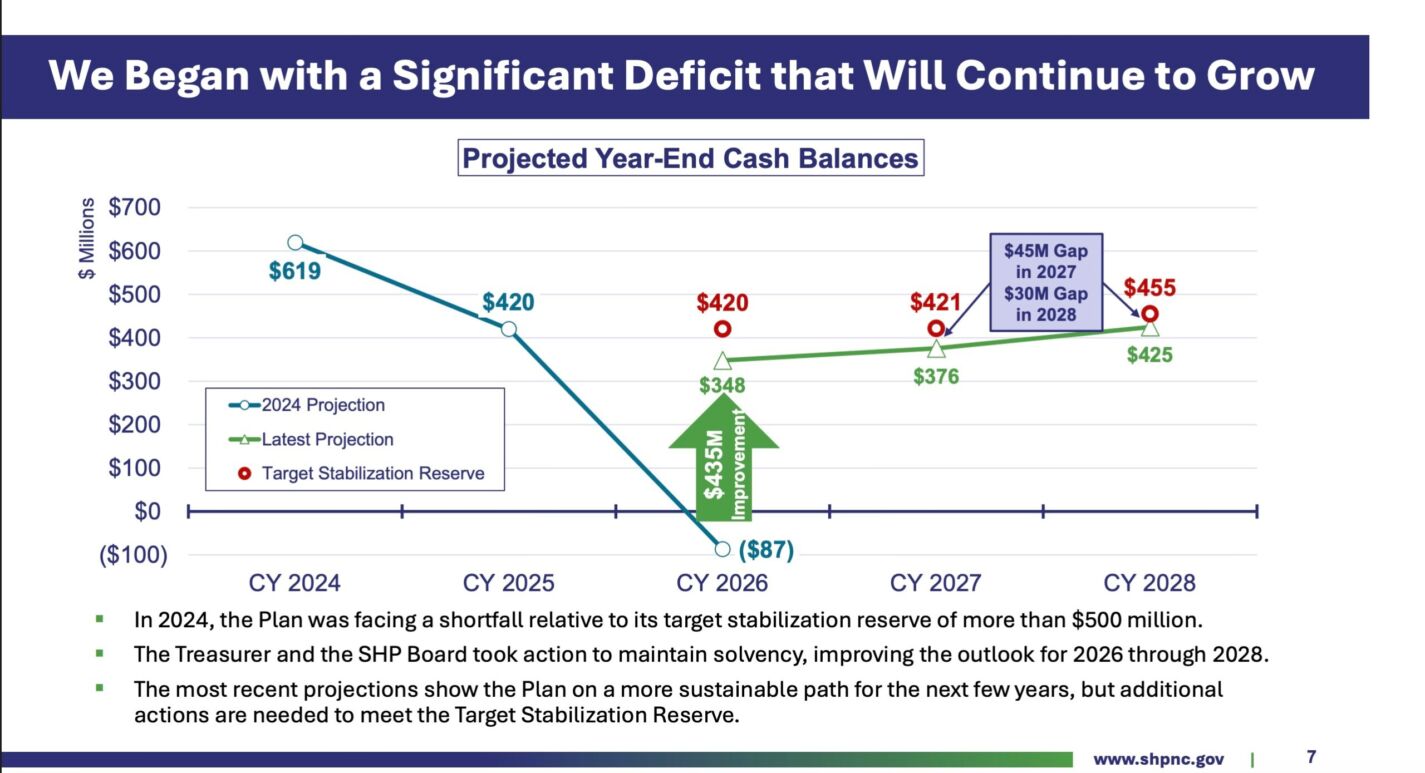
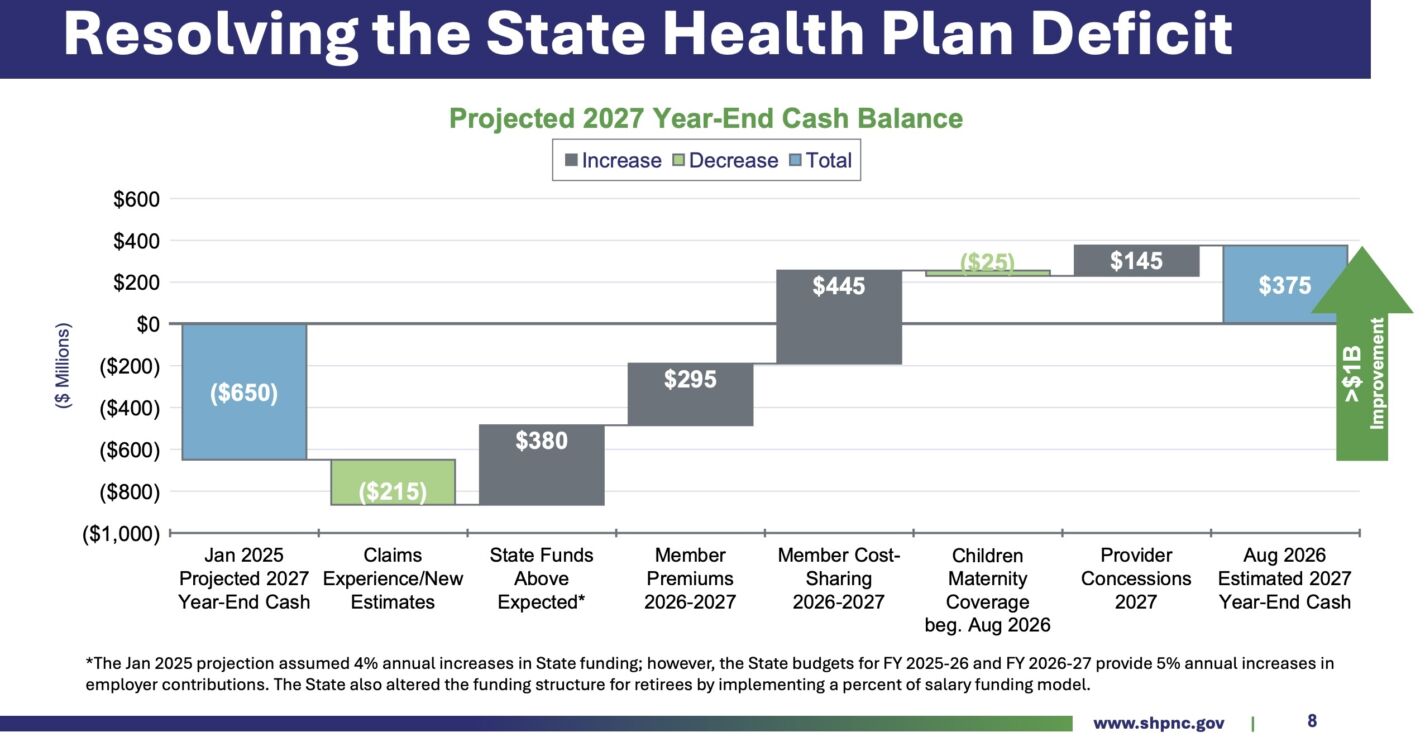
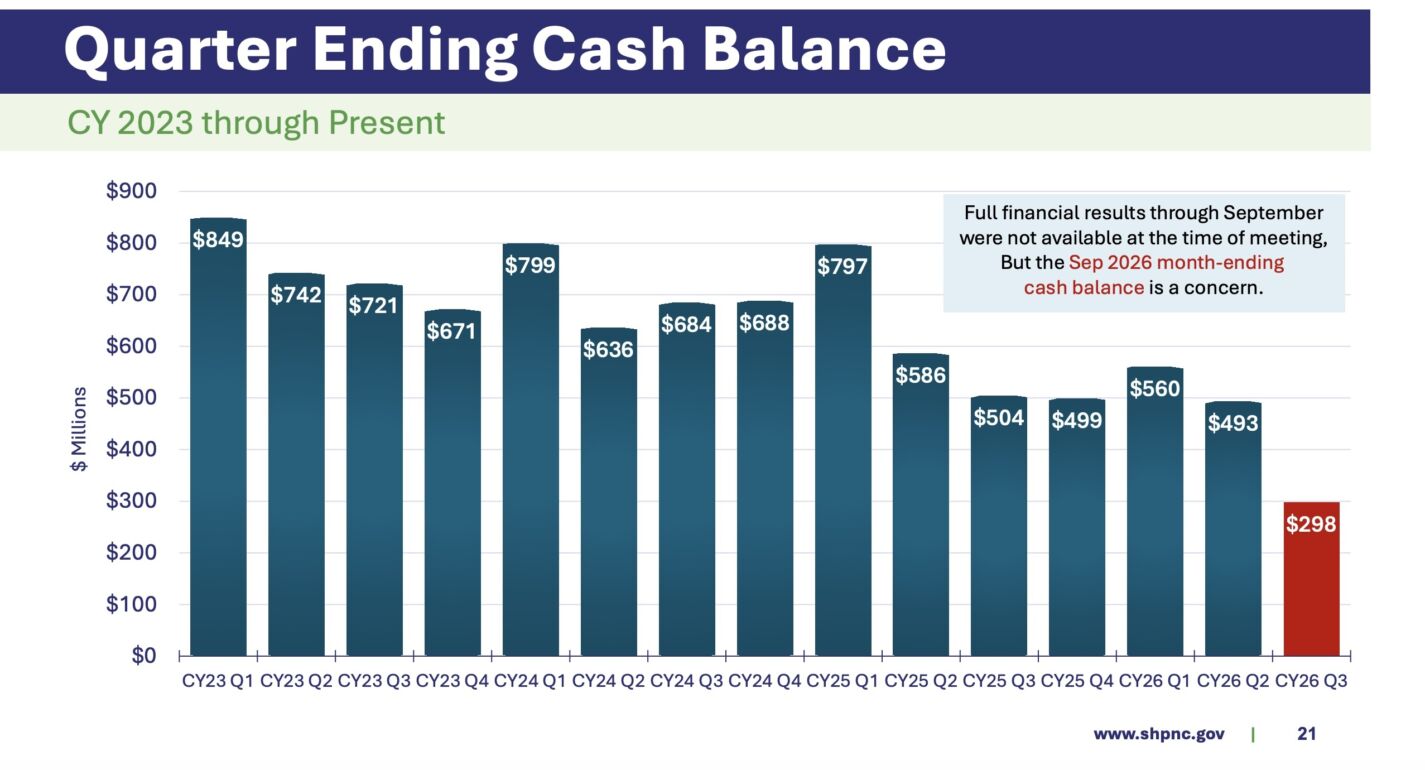
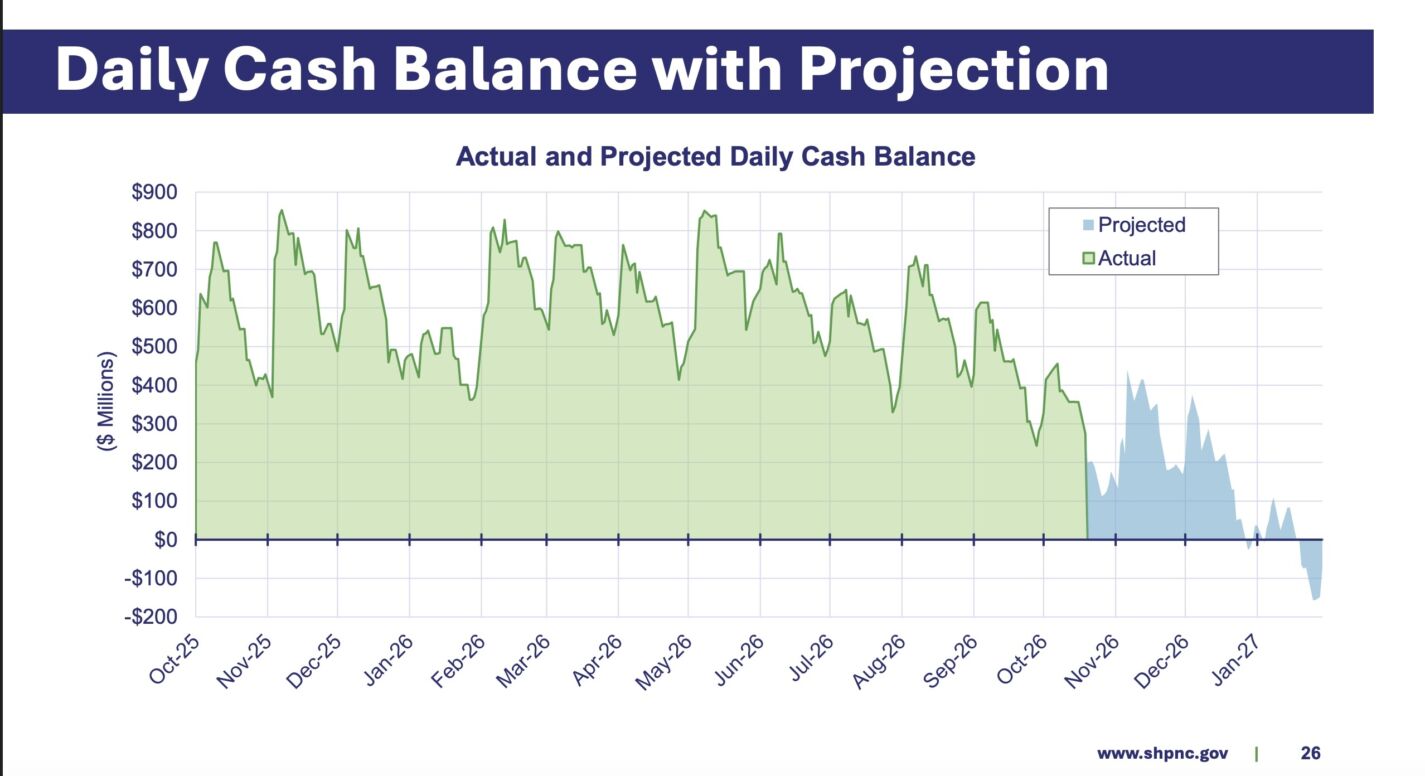
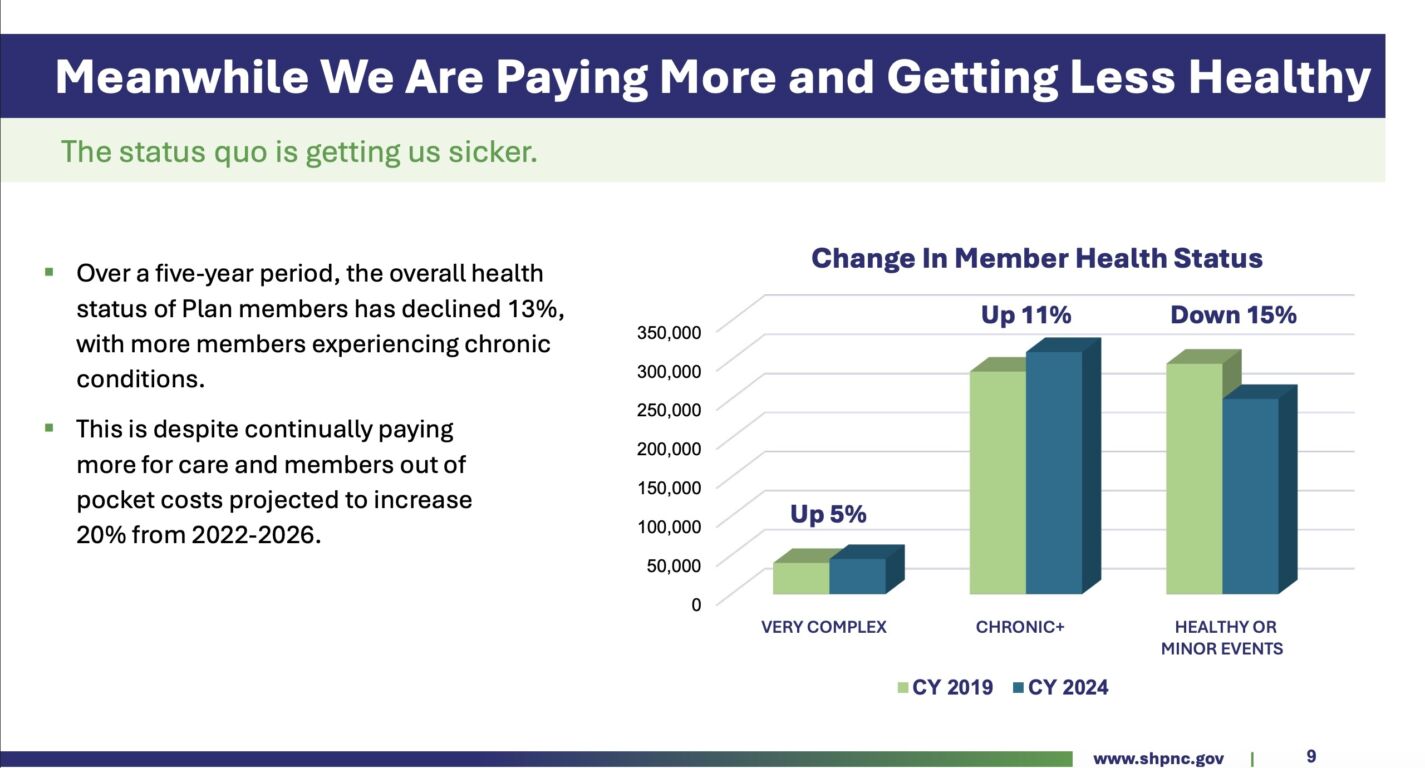
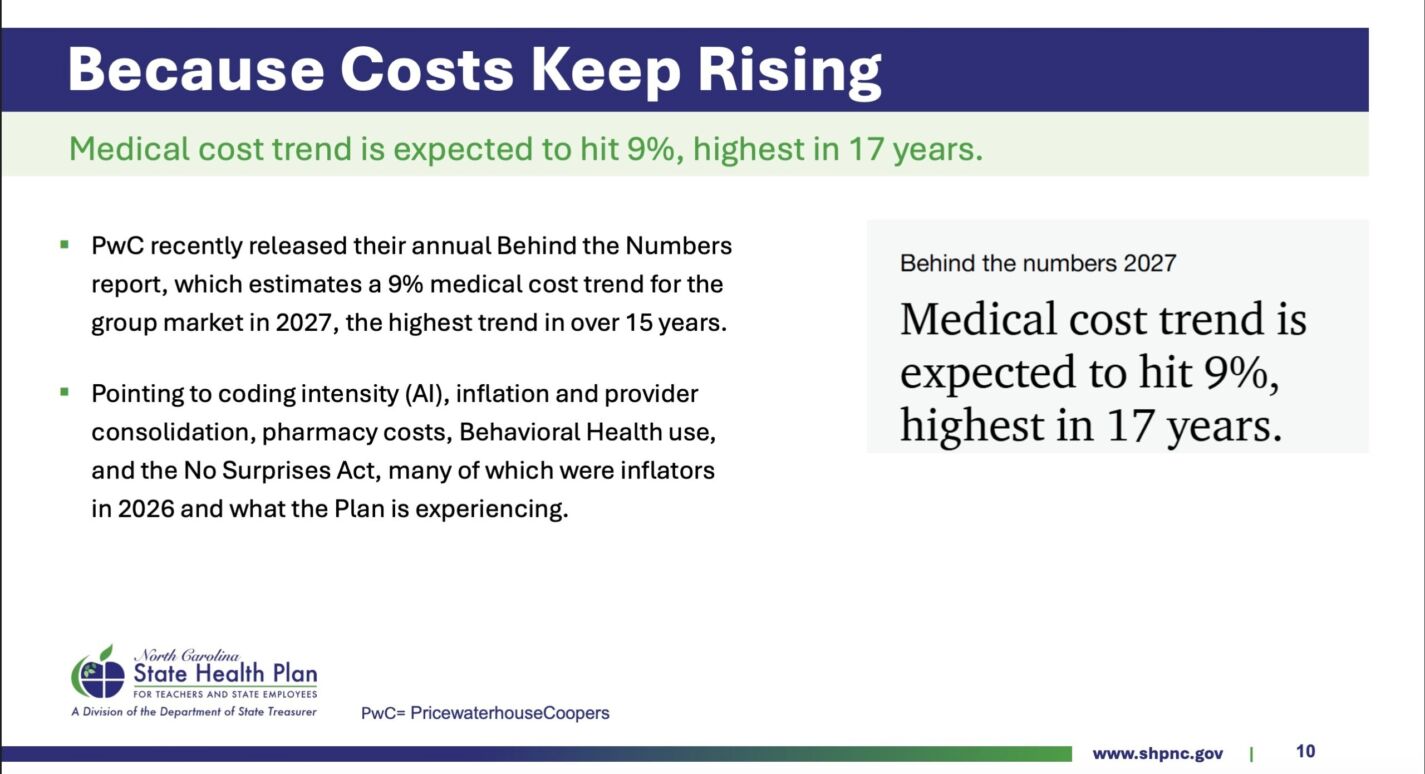
Aetna’s midyear review showed rising inpatient care and pharmacy costs, as well as an increase in claims exceeding $100,000, as more members required high-cost care. Emergency room visits declined overall, but visits for higher-acuity services increased.
Losses relative to projections accelerated from July through September 2026, depleting reserves faster than expected.
“We are a little bit sicker, a little bit lower income, and a little bit more rural, which generally speaking, tends to a little bit higher cost from a cost point of view,” Tom Friedman, executive administrator of the SHP, said at the meeting. “So, it is kind of an amalgamation of all those things that’s stacked on top of one another.”
More than 400 employing units send contributions, retirement contributions, and member-paid premiums to the plan each month.
State Budget Director Kristin Walker, an ex officio, nonvoting member of the SHP board, raised concerns about repaying what she said is a “loan” from the RHBF.
“I would like to see the math behind why we think the plan is going to be in a position to pay this back, as it’s not an insignificant amount of money, this $400 million,” she said. “So, without that, it’s hard, it’s just hard. We don’t have enough to go on right now. So there’s a lot of good thoughts, a lot of good intentions, and I appreciate all of that very much, but without some hard numbers on this, it’s hard to really know where the plan is headed over the next 6 to 8 months.”
A board member noted that money had been taken previously from the RHBF. In 1990, there was a budget shortfall during Gov. James Martin’s administration. Money was taken out of the fund but never returned. The board member added that the fund had been tapped several other times, most recently in 2023, when the money was returned.
Walker still urged caution about the move and suggested that if the SHP is paying more for retirees, the board should consider making the rate change permanent.
“If we can justify pulling out more money from that fund to cover the actual cost of retirees for which this fund is established, we ought to think about that,” she said.
Friedman said members need an incentive to become healthier; otherwise, the plan’s financial situation will only worsen.
“We charged people more for a worse benefit as they’ve gotten sicker, and with the costs planned to go up more, and if we kept the status quo, we didn’t charge you enough, so that is why, very plainly, we need a different path forward,” he said. “We need to tackle the cost of healthcare and not purely treat this as a revenue problem.”
Friedman added that health care providers told officials that costs only decline when people are healthier.
“We need money and time to invest in health,” he said. “We have not done a great job of that, so we need a reset, and I think about when we talk about preferred provider programs, and now that we have all four systems in, we have a financial reset of the state healthcare system that will start in 2027.”
Officials announced at the beginning of the meeting that the State Health Plan and Atrium Health had reached an agreement to bring all remaining Atrium Health hospitals and physicians into the plan’s in-network Access tier.
“The Preferred Provider Program has been a long journey,” State Treasurer Brad Briner, who chairs the SHP board, said. “It has taken a lot more twists and turns than I think anyone expected. Our members are going to be the beneficiaries of all that. The destination was worth the journey.”
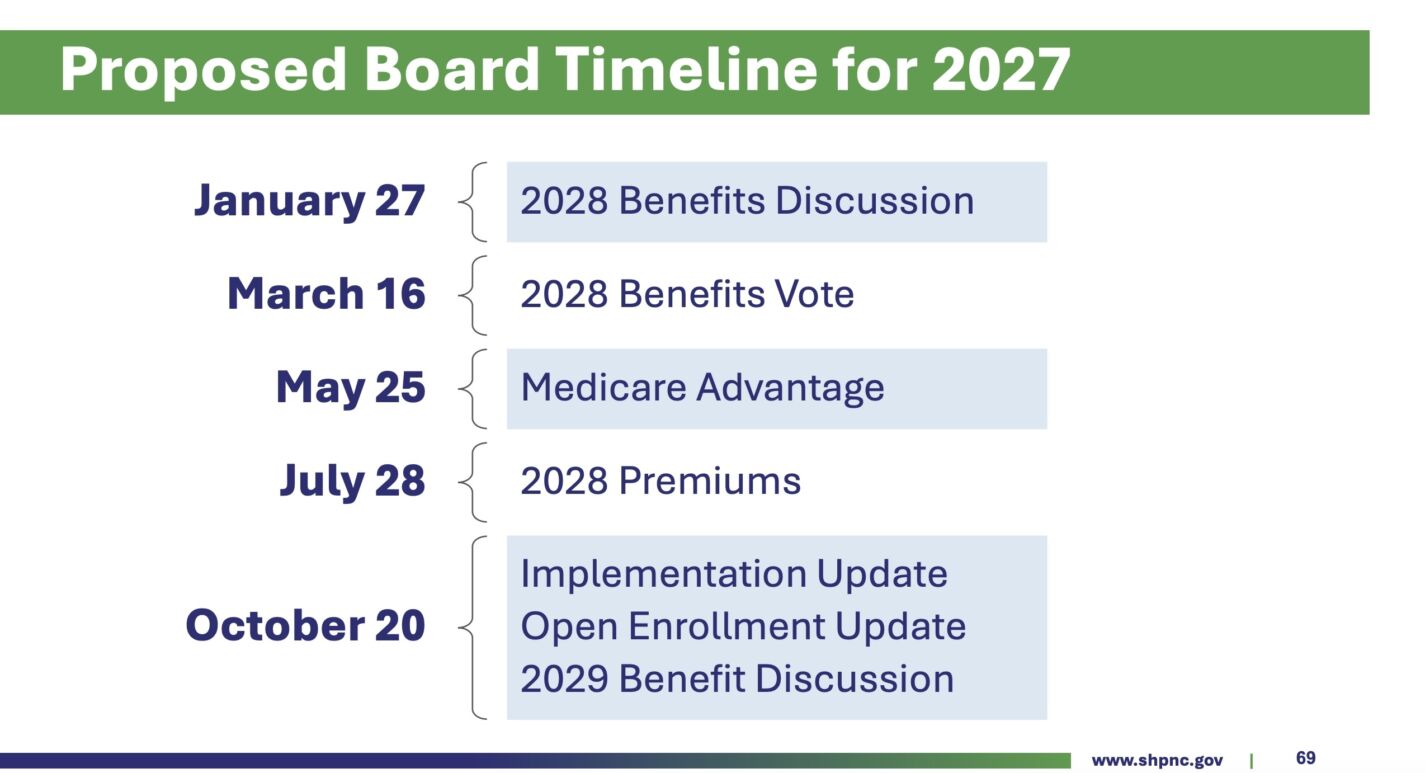
The board also reviewed a proposed timeline for 2027.